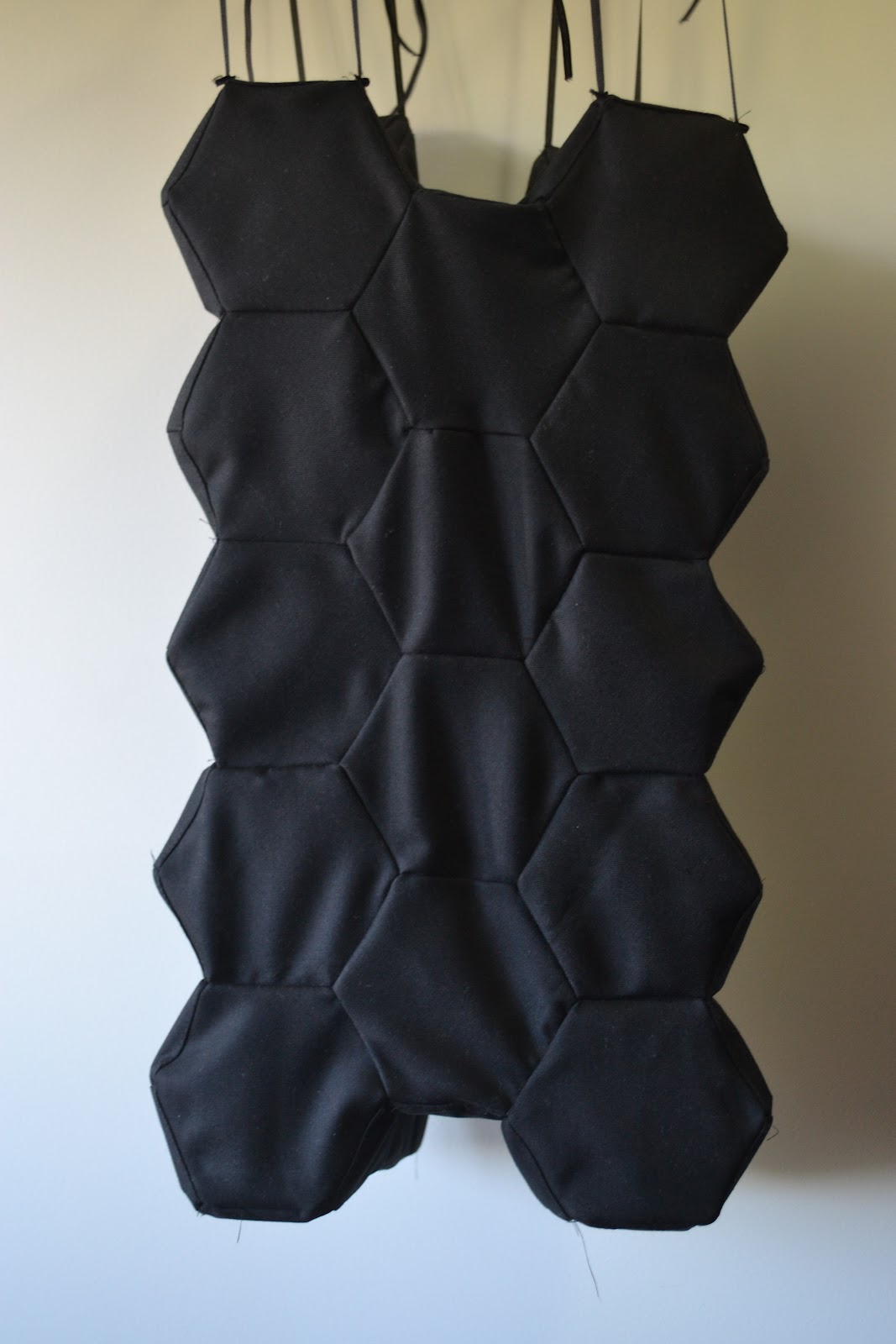
For the project one: bioinspired assignment, I decided to design a
storage system for clothing and shoes. In nature, the obvious choice would be
to see how nature stores things, such as butterflies collecting nectar, birds
collecting trinkets, or even how bee’s store their honey. Nature protects its
treasures in interesting ways, and I decided to look at how bees protect their
queen and store their nectar. The shape of the honeycomb, and the nature of the
hive has inspired me to create a clothing and shoe storage system that is
reminiscent of a wardrobe rack, but with biomimetic (the study of the structure
and function of biological systems) and biomimicry (examination of nature, its
models, systems, processes and elements to emulate or take inspiration from)
reflections.
My design takes form from the honeycomb structure, in that it stores our
clothing necessities hung up in a similar form to a hive. I chose this form
because the honeycomb structure usually relates to storage and organisation,
and this is exactly what my design aims to do. The shape is good for tessellating,
and therefore makes an easy pattern for the rack to take form. My design
focuses on bringing a storage system for medium density households, and
therefore is designed to be hung in the wardrobe for optimal organisation. It is
proven that rolling up clothes into cylindrical shapes decreases wrinkling, so
this storage design also gives the user the choice of storing both clothes and
shoes.
It holds its shape through the cardboard boning sewn into the material.
The material which makes up the storage rack is made from a blend of cotton and
hemp, both materials which are biodegradable and thus do not add to landfill. The
design is available in a range of colours to match with the users preferences,
as the material it is made of is available in a range of colours.